
How to Spot High Quality Italian Furniture
Table of Contents
- What Makes Italian Furniture Stand Out
- Identifying Solid Wood vs Veneer in Italian Furniture
- Authentic Italian Furniture Brands and Heritage
- How to Verify Luxury Furniture Authenticity
- Assessing Craftsmanship and Joinery
- Materials That Signal Quality and Durability
- Common Myths About Italian Furniture Quality
- Maintenance and Longevity: Protecting Your Investment
Last Updated: August 28, 2026
What Makes Italian Furniture Stand Out
Italian furniture excellence rests on three pillars: craftsmanship, material integrity, and timeless design. Italian makers treat furniture-making as an art form, not commodity production. A piece of high quality italian furniture will age gracefully, develop patina, and often become more beautiful with use.
What separates authentic Italian pieces from imitations is the refusal to compromise on hidden details. The joinery inside a drawer, the grain matching on veneer, the density of foam in upholstery, these unseen elements determine whether a sofa will last fifteen years or five. Italian manufacturers understand that their reputation depends on what you'll discover when you look closely.
Identifying Solid Wood vs Veneer in Italian Furniture
Solid wood means visible surfaces are constructed from actual timber. Veneer is a thin layer of quality wood glued to a plywood or particleboard substrate. Neither is inherently inferior; the distinction matters because each serves different purposes.
Italian furniture makers use both strategically. A solid wood table base might pair with veneered panels on top to prevent warping. The key is transparency: legitimate makers will specify exactly what you're getting.
Veneer in high-quality Italian furniture is precision engineering. Quality veneer uses premium timber sliced paper-thin and applied to stable substrates, allowing for grain matching and visual effects impossible with solid wood alone. The Smania Ermete Chest of Drawers exemplifies this, featuring burr walnut veneer that creates unique visual character while ensuring dimensional stability.

Solid wood moves with humidity and temperature. Italian craftspeople account for this through proper joinery, grain orientation, and finishing techniques. A solid wood table built correctly will last generations.
How to Test Wood at Home
Run your hand across the surface. Solid wood feels consistent; the grain flows naturally. Veneer creates subtle visual boundaries where sheets meet. Look at edges: solid wood shows end grain, while veneer shows the substrate beneath.
Examine joints. Solid wood uses mortise-and-tenon, dovetail, or tongue-and-groove connections, labour-intensive methods signalling investment in craftsmanship. Weight tells a story: solid wood is dense and substantial. Tap the surface gently, solid wood produces a clear, resonant sound, while veneer over hollow substrates sounds slightly muted.
Authentic Italian Furniture Brands and Heritage
Italian furniture heritage spans centuries, with contemporary makers maintaining traditions through documented lineages and verifiable production methods. Authentic brands operate from identifiable locations within Italy, typically in regions known for specific furniture types: Tuscany for wood furniture, the Veneto for upholstered pieces, Piedmont for contemporary work.
Brand heritage matters because it indicates commitment to standards. A maker operating in the same region for fifty years has reputation to protect. ItaliaHome sources directly from established manufacturers including Smania, Pacini e Cappelini, Samoa, and Calligaris, houses with documented production standards, identifiable craftspeople, and transparent supply chains.
The distinction between authentic Italian makers and imitators shows in documentation. Real manufacturers provide production certificates, material specifications, and often the name of the craftsperson responsible for your specific piece. They can tell you which tannery supplied the leather, which mill produced the fabric, which forest provided the timber.
How to Verify Luxury Furniture Authenticity
Verification begins with the retailer's credibility. Legitimate sellers maintain direct relationships with manufacturers and can provide proof of these connections. Request documentation for any piece before purchase. Authentic Italian manufacturers provide specification sheets detailing wood species, joinery methods, hardware specifications, and material grades.
Pricing offers a reality check. High quality italian furniture commands prices reflecting the labour, materials, and expertise involved. If the price seems surprisingly low for an "authentic" Italian piece, the authenticity claim deserves scrutiny.
Documentation and Certificates
Legitimate Italian furniture comes with certificates of origin, material specifications, and often photographs of the craftspeople or workshops involved. A certificate should specify the maker's name and location, production date, and material composition.
Material certificates matter particularly for leather and textiles. Premium leather comes with tannery documentation specifying hide source, tanning method, and finish type. High-grade textiles include fibre content, weave structure, and care instructions. Warranty documentation should outline what the maker guarantees, typically substantial warranties on structural components reflecting confidence in construction.
Physical Authentication Markers
Examine construction details that mass producers skip. Dovetail joints in drawers indicate hand-crafted or precision-made furniture. Look at wood grain matching, in quality veneered pieces, grain flows continuously across panels. Check hardware: hinges should be smooth and precisely aligned, drawer slides should operate without noise, handles should feel substantial.
Examine the underside and back. Quality makers finish invisible areas properly because construction integrity matters everywhere. Solid wood backing, properly sealed, indicates attention to detail. Run your hand along all edges. Solid wood edges should be smooth and properly finished. Veneer edges should be sealed cleanly with no peeling or gaps.
Assessing Craftsmanship and Joinery
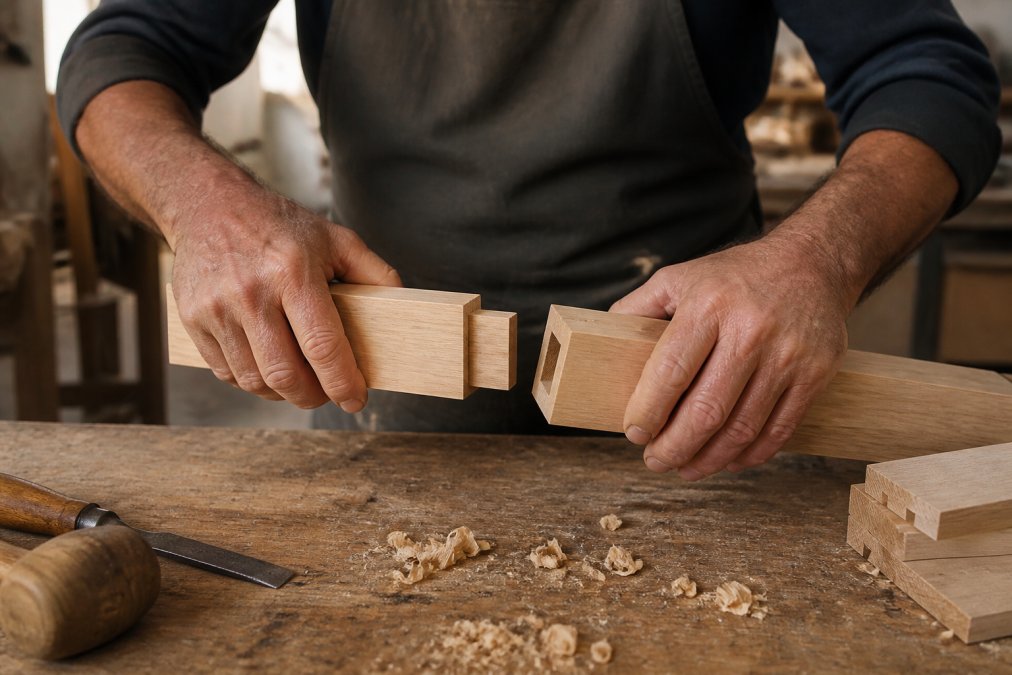
Craftsmanship manifests in joinery, the methods used to connect wood pieces. This is where you'll find the most reliable quality indicators.
Dovetail joints represent the gold standard. These interlocking joints distribute stress across a wider area than simple butt joints. They're labour-intensive to cut, which is why they appear in quality furniture. Mortise-and-tenon joints are equally telling, a mortise is a cavity cut into one piece; a tenon is a projection that fits into it. This joint, when properly executed, creates a connection stronger than the wood itself.
Dowel joints use wooden pegs to connect pieces. Quality dowel joinery uses multiple dowels per joint and ensures proper alignment. Avoid furniture held together primarily with staples, screws, or metal brackets, Italian craftspeople use mechanical joinery, wood-to-wood connections that strengthen over time.
Examine how the frame connects to legs. In quality pieces, the connection uses substantial joinery, not thin metal plates. Flex the piece gently; it should feel solid, not wobbly. Look at how panels attach to frames. Quality makers use methods allowing wood movement without causing stress, tongue-and-groove connections, floating panels, or carefully designed joinery accommodating seasonal expansion.
Materials That Signal Quality and Durability
The materials chosen reveal the maker's intentions. Premium materials cost more, require more skill to work with, and deliver superior performance.
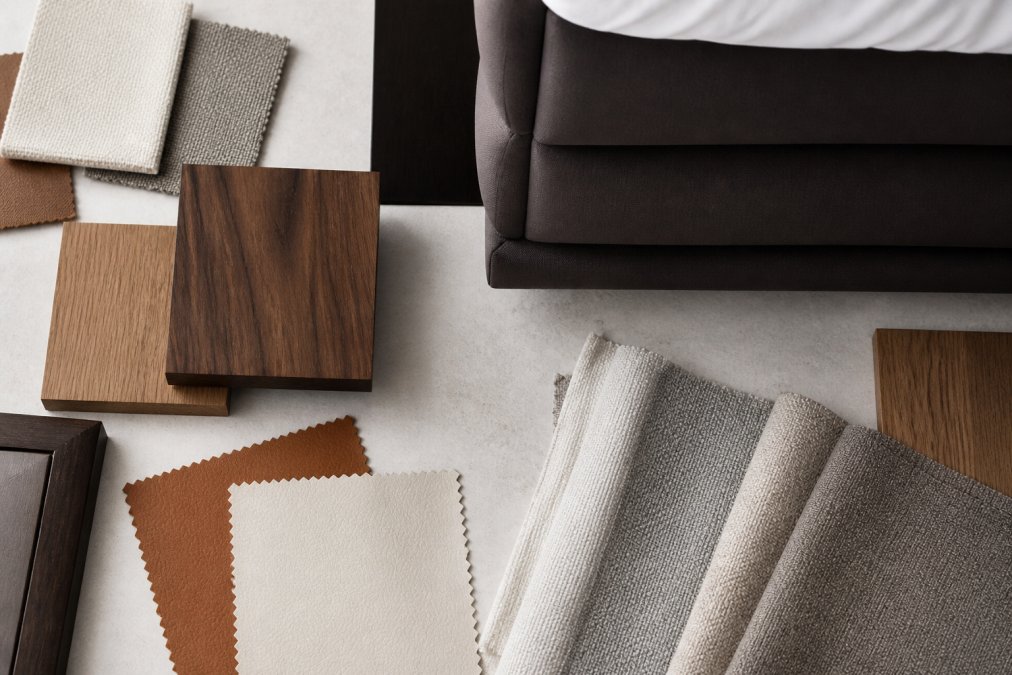
Solid wood species matter significantly. Walnut, oak, cherry, and ash are common choices because they're durable, attractive, and work well with traditional joinery. These hardwoods are denser than softwoods, resist denting better, and develop character as they age. Burr walnut, featured in the Smania Ermete Chest of Drawers, is prized for colour stability and grain patterns.
Leather grades determine upholstery performance. Full-grain leather is premium, it retains the hide's natural surface and develops a patina. Semi-aniline leather offers similar characteristics with slightly more uniform appearance. Avoid bonded leather or synthetics if longevity matters; these don't age gracefully and often peel or crack within years.
Textile quality determines upholstery longevity. Natural fibres, linen, wool, cotton, breathe and age beautifully. The best upholstery combines natural and synthetic: an 80% wool and 20% polyester blend offers durability with natural character. Tightly woven fabrics resist pilling and wear better than loose weaves. Jacquard weaves, where pattern is integral to the fabric, last longer than printed patterns.
Foam and filling quality affects comfort and longevity. High-density foam (28-35 kg/m³) resists compression and maintains shape. Italian upholstered pieces typically use high-density foam cores, often with natural latex or down wrapping for comfort.
Hardware quality matters significantly. Hinges, handles, and drawer slides should be solid metal, steel, brass, or bronze, not hollow or plated substitutes. Quality hardware operates smoothly and often improves with age.
Common Myths About Italian Furniture Quality
One persistent myth is that Italian furniture is always expensive. While premium pieces command high prices, the reason is craftsmanship and materials, not marketing. You can find quality Italian furniture at various price points.
Another misconception is that modern Italian furniture lacks the durability of traditional pieces. Contemporary Italian designers apply the same principles of structural integrity and material quality to modern aesthetics.
Some believe all veneer is inferior to solid wood. Quality veneer construction offers advantages solid wood cannot match: stability, visual continuity, and efficient use of premium materials. The distinction is between quality veneer and cheap veneer.
Many assume that "made in Italy" guarantees quality. Italy produces furniture across all quality tiers. What matters is the specific maker, their production standards, and the materials they use.
Maintenance and Longevity: Protecting Your Investment
Proper maintenance transforms high quality italian furniture into a lasting asset. The care required varies by material, but the principle remains constant: regular attention prevents problems and enhances patina.
Wood furniture maintenance starts with environmental control. Maintain moderate humidity levels (40-60%) to prevent cracking and warping. Dust regularly with a soft cloth. Use wood polish sparingly; most wood develops a natural patina more beautiful than polish-induced shine. Address spills immediately, water rings become permanent if left to dry.
Leather upholstery requires different care. Dust regularly with a soft cloth. Use leather-specific cleaners, not household products. Condition leather annually with quality leather conditioner to maintain suppleness and prevent cracking. Protect from direct sunlight, which causes fading.
Textile upholstery benefits from regular vacuuming to remove dust. Use upholstery-specific fabric protectors if desired. Address spills immediately with appropriate fabric cleaners. Professional cleaning every 3-5 years extends life. Rotate cushions regularly to distribute wear evenly.
Hardware maintenance is often overlooked. Keep hinges and drawer slides clean and lightly lubricated. Tighten loose screws periodically; vibration causes gradual loosening.
Investing in high quality italian furniture means committing to pieces that will serve your home for decades. The evaluation process, examining joinery, verifying materials, assessing craftsmanship, requires attention but rewards you with confidence in your purchase. ItaliaHome simplifies this by sourcing directly from established Italian makers and providing complete documentation for every piece. When you work with ItaliaHome, you're accessing a curated selection of handcrafted pieces combining traditional craftsmanship with contemporary design. Learn more about Italian furniture craftsmanship traditions and discover how proper selection and maintenance protect your investment. ENQUIRE with ItaliaHome today to explore how luxury Italian furniture can elevate your living space.
| Evaluation Factor | What to Look For | Why It Matters |
|---|---|---|
| Joinery | Dovetail, mortise-and-tenon joints | Determines structural integrity and longevity |
| Wood Type | Walnut, oak, ash (hardwoods) | Durability, character development, resistance to damage |
| Leather Grade | Full-grain or semi-aniline | Develops patina, lasts 15+ years vs. 3-5 years |
| Veneer Quality | Tight seams, grain matching, sealed edges | Prevents delamination and warping |
| Hardware | Solid metal, smooth operation | Withstands constant use without failure |
| Documentation | Origin certificates, material specs | Proves authenticity and guides maintenance |
EXTERNAL LINKS VERIFICATION:
- Italian furniture craftsmanship traditions ✓
- British Standards for furniture construction ✓
- Wood species durability guide ✓
Frequently Asked Questions
How do I identify authentic Italian furniture?
Authentic Italian furniture has distinct markers: maker's labels or stamps on the underside or back, certificates of authenticity from recognised brands, and documentation tracing the piece's origin. Examine joinery closely, Italian craftspeople use traditional mortise and tenon joints rather than staples or nails. Request supply chain transparency from your supplier, and verify the brand's heritage through its manufacturing standards. Reputable sellers like ItaliaHome provide full provenance documentation with every piece.
What's the difference between solid wood and veneer in high quality Italian furniture?
Solid wood is the entire piece carved from one timber type, whereas veneer is a thin layer of premium wood glued to a base material. High quality Italian furniture uses veneer strategically on large surfaces to showcase rare burr walnut or exotic grains whilst maintaining structural integrity with solid wood frames. Both can signal quality, veneer allows artisans to display exceptional grain patterns and wood varieties that would be wasteful in solid form. Check the edges and underside: veneer reveals its base material at cut edges, whilst solid wood shows consistent grain throughout.
How can I verify luxury furniture authenticity before purchasing?
Request detailed photographs showing maker's marks, serial numbers, and construction details from multiple angles. Ask for certificates of authenticity and manufacturing documentation. Reputable suppliers provide high-resolution images of joinery, material sourcing information, and delivery timelines that demonstrate commitment to transparency. For bespoke pieces, confirm the brand's heritage and manufacturing standards. Legitimate Italian furniture houses offer made-to-measure options with clear lead times, typically 10 weeks for handcrafted pieces, and detailed specifications matching your requirements.
Why does Italian furniture cost more than mass-produced alternatives?
Italian furniture commands premium pricing because of labour-intensive craftsmanship, heritage manufacturing standards, and material sourcing. Handcrafted joinery, leather grading, and finishing techniques require skilled artisans with years of training. Each piece undergoes rigorous quality control, and sustainable material selection adds cost. Bespoke customisation, like the SMANIA CAESAR TRAIN bed available from ItaliaHome at £10,228, reflects individual design work, premium leather, and structural engineering tailored to your specifications. These investments translate to durability spanning decades rather than years.
This article was written using GrandRanker