
How to Design a Luxury Home Office: A 2026 Guide
Table of Contents
- How to Design a Luxury Home Office: Essential Foundations
- Step 1: Plan Your Space and Spatial Layout
- Step 2: Select Bespoke Home Office Desk Solutions
- Step 3: Invest in Luxury Home Office Furniture UK
- Step 4: Implement High-End Home Office Storage Solutions
- Step 5: Design Layered Lighting and Colour Temperature
- Step 6: Add Biophilic Design and Acoustic Treatment
- Step 7: Integrate Smart Home Technology and Final Touches
- Frequently Asked Questions
Last Updated: August 31, 2026
How to Design a Luxury Home Office: Essential Foundations
Designing a luxury home office requires balancing aesthetic sophistication with functional workspace demands. At ItaliaHome, we understand that a well-designed home office isn't merely a place to work, it's an investment in your productivity, wellbeing, and the overall quality of your living environment. The difference between a functional office and a truly luxurious one lies in intentional choices across spatial planning, furniture selection, lighting design, and material quality.
This guide walks you through seven essential steps to transform your workspace into a refined professional environment. Whether you're redesigning an existing room or starting from scratch, each decision compounds to create a cohesive, elegant space that reflects your professional standards and personal taste.
Step 1: Plan Your Space and Spatial Layout
Begin with spatial planning before selecting a single piece of furniture. Your room's dimensions, natural light sources, and existing architectural features determine what's possible. Measure the space precisely, width, depth, ceiling height, and the location of windows, doors, and electrical outlets. This information guides every subsequent decision.
Consider traffic flow. Your desk should face the entrance if possible, positioning you to see who enters without feeling trapped. Allow at least 90cm of circulation space behind your chair and around the perimeter. This breathing room makes the space feel larger and prevents the cramped feeling that undermines luxury design.
Identify your focal point. In a luxury home office, this is typically your desk, but it could be a statement bookcase, architectural feature, or view through a window. Arrange furniture to highlight this focal point rather than obscuring it. The focal point anchors the room's visual hierarchy and creates a sense of intentional design.
Natural light matters profoundly. Position your desk perpendicular to windows when possible, this prevents screen glare while allowing ambient light to illuminate your workspace. If your room lacks adequate natural light, plan for layered artificial lighting to compensate. A room with poor light distribution feels institutional rather than luxurious, regardless of furniture quality.
Step 2: Select Bespoke Home Office Desk Solutions
Your desk is the centrepiece of luxury home office design. Rather than purchasing a standard desk, consider a bespoke home office desk solution tailored to your specific needs and space constraints. A custom desk accommodates your workflow, dimensions, and aesthetic preferences in ways off-the-shelf options cannot.
The Pacini e Cappellini Abaco Desk exemplifies this approach. Crafted from solid Canaletto walnut with a tempered glass top, it measures 121cm wide by 55cm deep, proportions that suit most home offices without dominating the space. The clear or bronze glass top creates visual lightness while the warm walnut base provides grounding sophistication. At £2,097, this represents the investment level appropriate for a desk you'll use daily for years.

Alternatively, the Pacini e Cappellini Athos Desk offers a different aesthetic. Its 160cm width suits professionals requiring extensive surface area for multiple monitors or reference materials. The solid ash construction with a pull-out leather insert provides both visual warmth and practical functionality. The leather insert, available in various colours, adds a tactile luxury element that elevates the workspace psychologically.
For a more understated approach, the Pacini e Cappellini Athena Desk combines solid ash with veneered surfaces and a practical left-side drawer. At 120cm wide and available in natural ash or white lacquer, it suits minimalist luxury aesthetics. The drawer provides discreet storage without visual clutter.
Desk depth matters more than many realise. A 55cm depth works for laptop-only workflows, but 70cm accommodates dual monitors, reference materials, and workspace breathing room. Ensure your desk height accommodates your chair and posture, typically 73-76cm from floor to desktop.
Step 3: Invest in Luxury Home Office Furniture UK
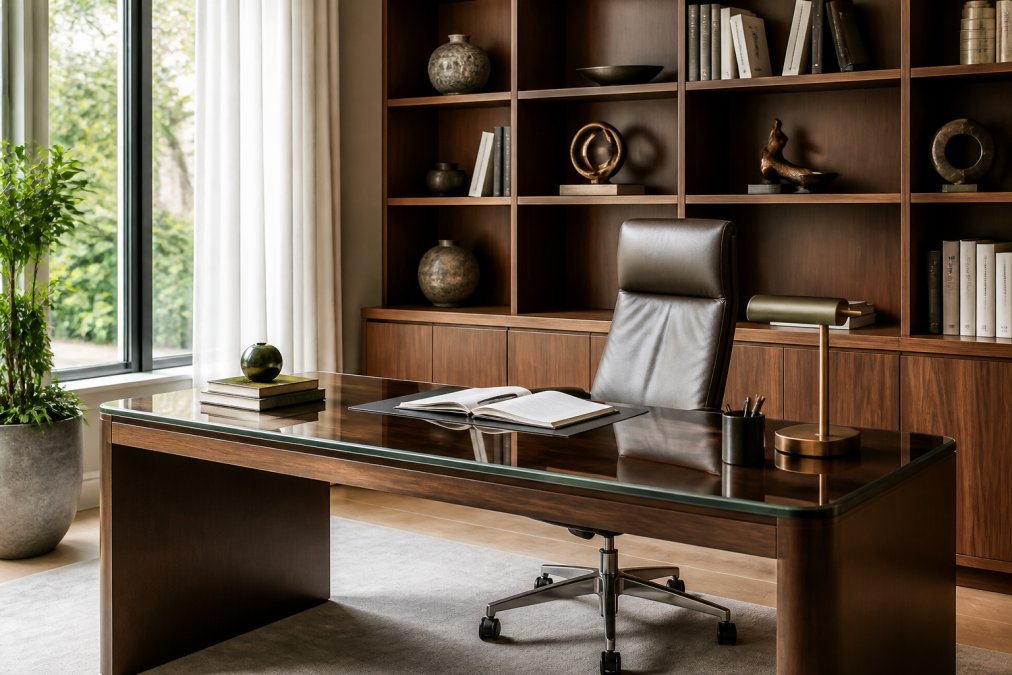
Beyond your desk, luxury home office furniture UK selections should prioritize ergonomics alongside aesthetics. Your chair deserves as much consideration as your desk. An ergonomic chair supports proper spinal alignment during extended work sessions. Look for adjustable seat height, lumbar support, and armrests that position your elbows at 90 degrees when typing.
The chair's aesthetic must coordinate with your desk and overall design scheme. Leather upholstery in neutral tones, charcoal, cognac, or cream, complements most luxury home office designs. Avoid budget office chairs that prioritise function at the expense of visual quality.
Sideboards or console tables create additional surface area and visual interest. A narrow console behind your desk provides space for a printer, decorative objects, or plants without consuming floor area. Italian furniture makers excel at creating pieces that appear delicate despite strong construction, a hallmark of true luxury design.
A small occasional table serves multiple purposes: a spot for coffee during calls, a surface for displaying design objects, or an informal meeting space. Scale matters here. A table that's too large consumes precious space; too small appears insubstantial. Proportion your furniture to your room's dimensions.
Storage furniture should blend seamlessly with your aesthetic rather than appearing utilitarian. Open shelving displays curated objects and books, creating visual interest whilst maintaining functionality. Closed cabinetry conceals clutter. The balance between open and closed storage prevents your luxury office from feeling either sparse or chaotic.
Step 4: Implement High-End Home Office Storage Solutions
Clutter destroys luxury. High-end home office storage solutions must be beautiful enough to remain visible whilst functional enough to contain your work materials. This distinction separates luxury storage from institutional filing systems.
The Pacini e Cappellini Elisabeth Bookcase exemplifies this principle. Available in three widths, 126cm, 222cm, or 318cm, with adjustable depths of 18cm or 30cm, this modular system accommodates various room configurations. Constructed from veneered Canaletto walnut or fibreboard, it can hang on walls as a partition, fix to ceilings, or configure as a corner installation.

At £2,908, this bookcase represents a significant investment, but the quality justifies the cost. Handcrafted Italian construction means these pieces develop character over decades rather than deteriorating after a few years.
For smaller spaces, floating shelves in matching wood tones create visual lightness whilst providing storage. Limit floating shelves to three or four per wall, more creates visual noise rather than sophistication.
Cable management separates luxury offices from chaotic ones. Route cables behind your desk using cable trays or channels. If cables must be visible, use fabric-covered cable management systems in colours matching your colour palette. Visible tangled cables undermine even the most expensive furniture.
Drawer organisation systems keep desk drawers functional. Use dividers to create designated spaces for pens, notepads, and supplies. When you open a drawer, everything should have a place. This small detail signals intentional design.
Step 5: Design Layered Lighting and Colour Temperature
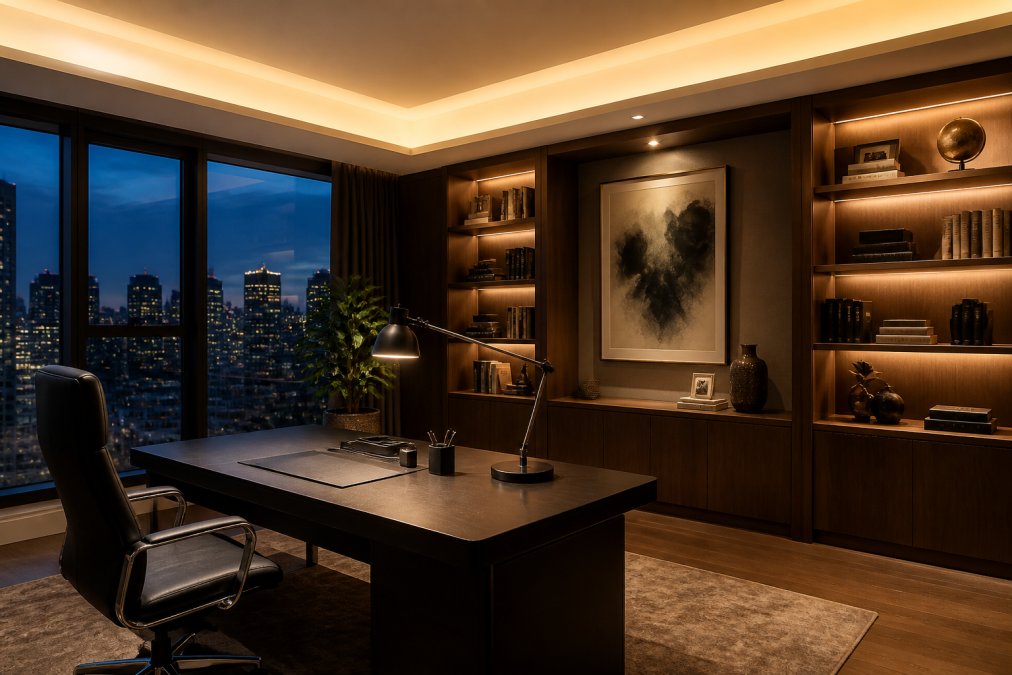
Lighting transforms a workspace from functional to luxurious. Layered lighting, combining ambient, task, and accent illumination, creates visual depth and supports different activities throughout your workday.
Ambient lighting provides overall room illumination. Ceiling fixtures or recessed lights should offer adjustable intensity. Dimmable ambient lighting lets you adapt the space to different times of day and moods. Warm white light (2700K colour temperature) feels more inviting than cool white (4000K), which can feel harsh during extended work sessions (peer-reviewed research on lighting and wellbeing).
Task lighting illuminates your work surface without creating glare on screens. A desk lamp with an adjustable arm and warm white output (2700-3000K) reduces eye strain. Position the lamp to the side of your dominant hand, angling it to light your work surface without reflecting onto your monitor.
Accent lighting highlights architectural features, artwork, or shelving. Small spotlights above a bookcase or picture lights above artwork create visual interest and draw attention to curated objects. This layering prevents your office from feeling flat or utilitarian.
Colour temperature profoundly affects mood and productivity. Warm light (2700K) promotes relaxation and focus, making it ideal for most home offices. Cool light (4000K or higher) can feel clinical and fatiguing during extended work. If you must use cooler light for specific tasks, balance it with warm ambient lighting elsewhere in the room.
Natural light remains superior to artificial light. Maximise window exposure and use sheer curtains to diffuse harsh direct sunlight. If your room lacks natural light, invest in full-spectrum bulbs that approximate daylight. This small investment significantly impacts your wellbeing during working hours.
Step 6: Add Biophilic Design and Acoustic Treatment
Biophilic design, incorporating natural elements, reduces stress and increases focus. Plants aren't merely decorative; they improve air quality and create a connection to nature within your workspace. Select plants suited to your room's light conditions: pothos or snake plants tolerate low light, whilst fiddle leaf figs thrive in bright spaces.
Position plants at varying heights using shelving or plant stands. A large floor plant in a corner creates visual softness. Smaller potted plants on shelving add interest without consuming desk space. The key is intentional placement rather than random clustering.
Natural materials amplify biophilic benefits. Wood surfaces, your desk, shelving, and flooring, create warmth and connection to natural systems. Leather upholstery, stone accents, and natural fibre rugs reinforce this aesthetic. Avoid plastic or heavily processed materials that feel disconnected from nature.
Acoustic treatment prevents your luxury office from becoming an echo chamber. Hard surfaces, glass desks, wooden floors, plaster walls, reflect sound, creating fatigue during video calls and reducing focus. Soft furnishings absorb sound: upholstered chairs, fabric wall panels, and curtains all contribute to acoustic comfort.
Acoustic panels designed to blend with your aesthetic exist beyond the industrial grey versions. Fabric-wrapped panels in colours matching your palette absorb sound whilst maintaining visual sophistication. Position them on walls opposite hard surfaces to balance reflectivity.
Sound masking, subtle background noise, improves focus for some professionals. A small water feature or carefully selected ambient soundscape (rainfall, forest ambience) masks disruptive external noise without creating distraction. This is particularly valuable if your home office adjoins busy household areas.
Step 7: Integrate Smart Home Technology and Final Touches
Smart home integration enhances functionality without compromising aesthetics. Integrated systems control lighting, temperature, and audio through voice commands or mobile apps, eliminating visible switches and controls that disrupt visual continuity.
Smart lighting systems let you adjust colour temperature and intensity throughout the day, supporting your circadian rhythm. Morning cool light promotes alertness; afternoon warm light prevents fatigue as daylight diminishes. This automated adjustment requires minimal effort whilst delivering significant wellbeing benefits.
Climate control matters profoundly for focus and comfort. A smart thermostat maintains your preferred temperature without requiring manual adjustment. Overheated or cold offices undermine even the most beautiful design.
Cable management technology keeps your workspace clean. Wireless charging pads eliminate charging cable clutter. Bluetooth speakers replace visible wired audio systems. The goal is functionality without visual complexity.
Final touches elevate your luxury home office from well-designed to truly refined. Curate artwork reflecting your aesthetic and interests. Commission a custom piece or select gallery-quality prints that coordinate with your colour palette. Art humanises a workspace and signals intentional design.
Introduce texture through layering. A cashmere throw on your chair, a silk cushion on a sideboard, or a wool area rug beneath your desk creates tactile luxury. These elements make your office feel like a considered living space rather than a functional box.
Fragrance completes the sensory experience. A subtle scent, perhaps a high-quality candle or diffuser, creates an olfactory signature for your space. Avoid overwhelming fragrances; the goal is a barely perceptible presence that enhances rather than dominates.
Personalisation distinguishes your office from generic luxury design. Display objects reflecting your interests, travels, or achievements. A collection of design books, a treasured sculpture, or framed photographs creates narrative within your space. These elements should feel curated rather than cluttered, select meaningful pieces rather than filling every surface.
Designing a luxury home office requires balancing aesthetic refinement with practical functionality. Each decision, from spatial planning through final touches, compounds to create a workspace that supports both productivity and wellbeing. ItaliaHome specialises in sourcing the handcrafted Italian furniture that forms the foundation of truly luxurious home offices. Our curated collection of bespoke desks, storage solutions, and complementary pieces ensures your office reflects both your professional standards and personal taste. Explore our luxury home office furniture collection to discover pieces that elevate your workspace. With thoughtful planning and quality furnishings, your home office becomes more than a workspace, it becomes a sanctuary for meaningful work.
=== FAQ ANSWERS (audit these too, same rules) ===
[1] Q: What are the essential elements of a high-end home office? A: A luxury home office combines an ergonomic chair, statement desk, layered lighting (ambient, task, and accent), bespoke storage, acoustic insulation, and thoughtful colour palettes. The space should balance productivity with comfort through spatial planning, natural light where possible, and curated decor that reflects your professional aesthetic. Quality materials, solid wood, leather, glass, distinguish luxury from standard office furniture.
[2] Q: How do you incorporate bespoke furniture into a home office design? A: Bespoke home office desk solutions are tailored to your space's dimensions and workflow. Start by measuring your room precisely, identifying your focal point, and determining how you work best. Choose a custom desk in solid materials like ash or walnut that fits your layout exactly, then select complementary storage and seating. Bespoke pieces from craftspeople like Pacini e Cappellini ensure your furniture works with your space, not against it.

[3] Q: What lighting techniques define a luxury workspace? A: Luxury offices use layered lighting: ambient lighting for overall brightness, task lighting at desk level to reduce eye strain, and accent lighting to highlight architectural features or artwork. Colour temperature matters, warmer light (2700K-3000K) creates focus and comfort, while cooler light (4000K-5000K) suits analytical work. Position lights to avoid glare on screens and create depth through multiple sources rather than relying on a single overhead fixture.
[4] Q: How long does it take to design and install a bespoke home office setup? A: Bespoke furniture typically requires 8-10 weeks for delivery from Italian makers. Design planning takes time before ordering. Installation depends on complexity: a simple desk setup may take a day, while custom storage systems with cable management and acoustic panels may need more time. Plan your project timeline accordingly, especially if you have specific deadlines.
Frequently Asked Questions
What are the essential elements of a high-end home office?
A luxury home office combines an ergonomic chair, statement desk, layered lighting (ambient, task, and accent), bespoke storage, acoustic insulation, and thoughtful colour palettes. The space should balance productivity with comfort through spatial planning, natural light where possible, and curated decor that reflects your professional aesthetic. Quality materials, solid wood, leather, glass, distinguish luxury from standard office furniture.
How do you incorporate bespoke furniture into a home office design?
Bespoke home office desk solutions are tailored to your space's dimensions and workflow. Start by measuring your room precisely, identifying your focal point, and determining how you work best. Choose a custom desk in solid materials like ash or walnut that fits your layout exactly, then select complementary storage and seating. Bespoke pieces from craftspeople like Pacini e Cappellini ensure your furniture works with your space, not against it.
What lighting techniques define a luxury workspace?
Luxury offices use layered lighting: ambient lighting for overall brightness, task lighting at desk level to reduce eye strain, and accent lighting to highlight architectural features or artwork. Colour temperature matters, warmer light (2700K-3000K) creates focus and comfort, while cooler light (4000K-5000K) suits analytical work. Position lights to avoid glare on screens and create depth through multiple sources rather than relying on a single overhead fixture.
How long does it take to design and install a bespoke home office setup?
Bespoke furniture typically requires 8-10 weeks for delivery from Italian makers. Design planning takes time before ordering. Installation depends on complexity: a simple desk setup may take a day, while custom storage systems with cable management and acoustic panels may need more time. Plan your project timeline accordingly, especially if you have specific deadlines.