
Durable Luxury Furniture for Busy Homes: The 2026 Guide
Table of Contents
- What Makes Luxury Furniture Truly Durable?
- Performance Fabrics for Luxury Sofas: A Practical Guide
- Comparing Durable Luxury Sofas for Family Homes
- How to Measure Space for Luxury Furniture Delivery
- Essential Luxury Furniture Maintenance Tips
- Repairability and Lifecycle Cost: The Smarter Investment
- Conclusion: Choosing Pieces That Earn Their Place
- Frequently Asked Questions
Last Updated: September 9, 2026
Durable luxury furniture for busy homes is furniture that combines premium materials and traditional construction methods with the practical resilience needed to survive daily family life. It is the difference between a piece that looks expensive for a season and one that still looks exceptional after a decade of use. At ItaliaHome, we offer handcrafted Italian pieces for UK families, and a common question we hear is not about style, but about longevity: will this actually last? Below, we will show you exactly how to judge whether a luxury piece will earn its place in a high-traffic home, covering joinery, materials, maintenance, and the long-term economics of buying well.
The market is full of furniture that borrows luxury aesthetics without the substance to back them up. Understanding what makes a piece genuinely durable changes everything about how you shop, what you pay, and what your home looks like in ten years. The five principles we cover can help discerning homeowners avoid the disappointment of a tired-looking sofa after just two years.
What Makes Luxury Furniture Truly Durable?
True durability in luxury furniture comes down to the unseen elements: the frame, the joinery, and the suspension system. A beautiful cover over a weak structure is merely an expensive slipcover. The most reliable indicator of longevity is whether the piece is built to be repaired and reupholstered, a hallmark of traditional craftsmanship rather than mass production.
The Hidden Role of Joinery and Frames
The frame is the skeleton of any sofa or chair, and this is where the quality gap between luxury and imitation widens dramatically. Solid hardwood frames, typically kiln-dried to prevent warping, are the industry standard for heirloom-quality furniture. The joinery techniques matter just as much as the timber: corner blocks that are screwed and glued, mortise-and-tenon joints, and dowelled connections provide structural stability that stapled frames simply cannot match.
A common mistake is assuming that weight alone signals quality. Some manufacturers add heavy particleboard to make pieces feel substantial. Ask instead about the frame material and how the joints are secured. If a retailer cannot tell you whether the frame is solid hardwood or engineered wood, that silence is your answer.
Stress-Testing Materials for High-Traffic Living
Before any material earns a place in a busy family home, it should pass what we call the "daily life" test: spills, pet claws, sharp toy corners, and the relentless friction of daily use. For high-traffic living, material integrity is everything. Full-grain leather develops a desirable patina over time, while cheaper splits and bonded leathers peel and crack. Performance textiles, engineered specifically for stain resistance, offer a different kind of resilience (the American Academy of Dermatology).
When evaluating a piece, ask about the fabric's abrasion resistance, measured in Martindale rubs, and whether the finish is treated for stain resistance. A luxury sofa should not require a "no touching" rule; it should be strong enough to live in the room where life happens. This is the utility-first approach most style-led guides miss entirely.
Performance Fabrics for Luxury Sofas: A Practical Guide
Performance fabrics for luxury sofas are engineered textiles that resist stains, moisture, and wear while maintaining the tactile quality of natural materials. They are the practical answer for families who want a high-end look without the anxiety of cream-coloured linen. These fabrics are not a compromise; they are a considered choice for homes where the sofa is a gathering place, not a showpiece.
The key distinction lies in the weave and the treatment. Tightly woven fabrics resist dirt penetration, while a protective finish causes spills to bead up rather than soak in. For homes with young children or pets, look for fabrics with high Martindale rub counts and solution-dyed fibres, which hold their colour far longer than printed alternatives. The best performance textiles are nearly indistinguishable from their natural counterparts until the moment a glass of red wine hits the cushion.
Comparing Durable Luxury Sofas for Family Homes
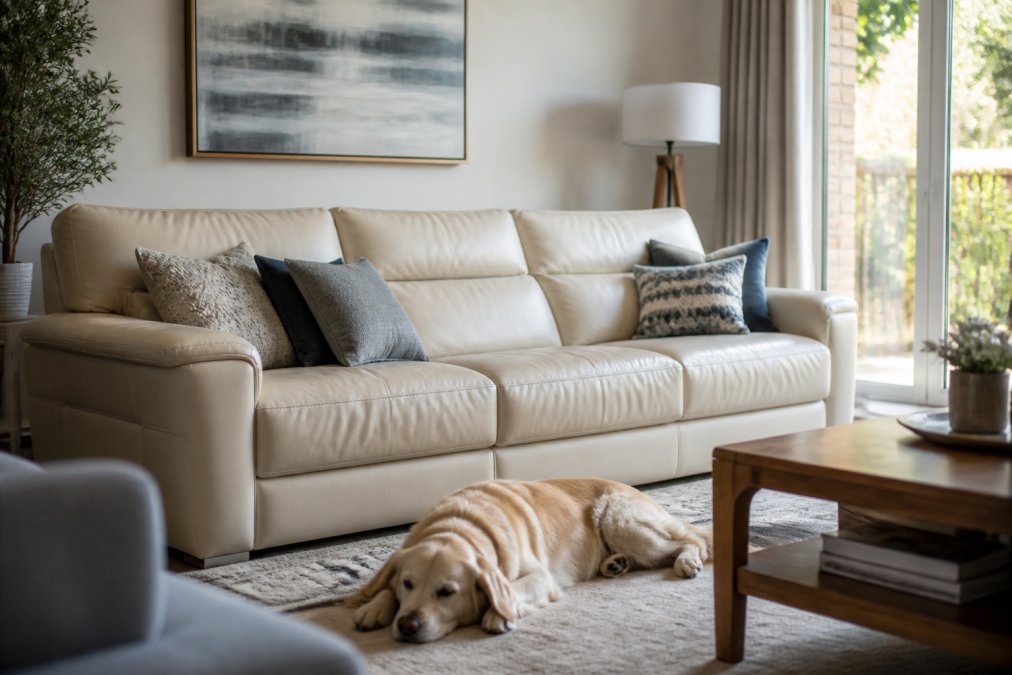
Choosing the right sofa is the single most consequential furniture decision for a busy home. The ideal piece balances three factors: structural integrity, upholstery resilience, and ergonomic design that supports the way your family actually sits. We have compared several configurations from our own collection to illustrate how these factors play out in practice.
| Model | Material | Best For | Starting Price |
|---|---|---|---|
| LeConfort Simba Sofa | Fabric or eco-leather | Versatile, budget-conscious families | £1,810.00 |
| Divano Abbraccio Italian Sofa | Removable upholstery | Homes wanting washable, changeable covers | £2,290.00 |
| Lecomfort Russel Sofa | Leather or eco-leather | Sleek, low-maintenance style | £2,725.00 |
| Samoa Sugar Corner Sofa | Fabric or leather | Large families needing corner seating | £4,530.00 |
The Divano Abbraccio, with its removable upholstery, can be cleaned professionally or replaced entirely, extending the sofa's life far beyond a fixed-upholstery equivalent. The Samoa Sugar Corner Sofa is a strong choice for larger families where seating capacity is the primary constraint.

Leather vs. Performance Textile: Which Holds Up?
The leather versus textile debate is the oldest in furniture, and the answer depends entirely on your household's specific chaos. Leather, particularly full-grain, is unmatched for wipe-clean convenience and develops character with age, but it scratches and requires conditioning to prevent drying. Performance textiles resist punctures better and feel warmer in winter, but they demand more careful stain management over the long term.
For households with pets, leather often wins because claws do not snag its surface. For households with toddlers who spill constantly, a stain-resistant performance textile is the more forgiving choice. There is no universal winner, only the right material for your specific risk profile. A reputable supplier should offer both options and guide you rather than pushing a single material.
How to Measure Space for Luxury Furniture Delivery
Measuring for luxury furniture delivery is a two-stage process: first, confirm the piece fits the room aesthetically, and second, confirm it physically fits through your doorways, lifts, and staircases. The second stage is where luxury purchases fail, and it is entirely preventable with a tape measure and a few minutes of planning.
Start by measuring the width of every doorway, hallway, and stair landing the piece must traverse to reach its final position. A sofa that fits your living room wall may still be impossible to deliver if it cannot negotiate a 90-degree turn on a narrow staircase. Note the ceiling height on staircases and any low beams. For corner sofas, measure the diagonal clearance of the room, as these pieces often require significant manoeuvring space.
For bespoke or made-to-measure commissions, such as the corner configurations available on request from our collection, the supplier should provide detailed guidance. Do not rely on estimates. A precise measurement taken now prevents a costly logistical headache later.
Essential Luxury Furniture Maintenance Tips
Luxury furniture maintenance is less about intensive care and more about consistent, simple habits that prevent damage from accumulating. The goal is to protect your investment with a routine that takes minutes, not weekends. Furniture longevity is achieved through small, regular actions rather than occasional deep cleans.
- Vacuum upholstery weekly with a soft brush attachment to remove abrasive dust and grit.
- Rotate and flip removable cushions monthly to ensure even wear and maintain their shape.
- Blot spills immediately with a clean, dry cloth; never rub, as this pushes the liquid deeper into the fibres.
- Keep leather and wood away from direct radiators and prolonged sunlight to prevent drying and fading.
- Use felt pads under decorative objects and coasters under drinks to protect wood finishes.
For leather pieces, invest in a high-quality conditioner and apply it every six months. This maintains the suppleness of full-grain leather and prevents the cracking that signals premature ageing. For performance textiles, always check the manufacturer's care code before attempting any cleaning, as some treatments are water-sensitive. These practices, applied consistently, are what separate a home that looks curated from one that simply has expensive furniture.
Repairability and Lifecycle Cost: The Smarter Investment
Repairability is the most overlooked factor in furniture purchasing, yet it is the single greatest determinant of true lifecycle cost. A sofa with a solid hardwood frame and a removable, replaceable cover can be restored to near-new condition for a fraction of the cost of replacement. A sofa with a stapled frame and fixed upholstery is destined for the landfill the moment its cover wears out.
This is where the economics of durable luxury furniture become compelling. A sofa that lasts fifteen years with one reupholstery at year eight can cost less per year than a sofa replaced every three years (extension.umn.edu). The luxury piece, thanks to its repairability, can be a financially prudent choice, not merely the indulgent one. This lifecycle cost analysis is rarely presented by style-focused retailers, but it is a calculation that matters for your bank balance.
When evaluating a piece, ask whether the manufacturer offers restoration services or whether local craftspeople can access the frame. The availability of spare parts and the construction method dictate whether a beloved piece can be saved or must be discarded. Choosing furniture built on traditional principles of repairability is a decision that benefits both your home and the environment, reducing waste through eco-conscious consumption.
Conclusion: Choosing Pieces That Earn Their Place
The challenge of furnishing a busy home is not finding furniture that looks good on day one; it is finding pieces that still look good on day one thousand. Durability is not a feature to be added but a philosophy of construction that prioritises solid hardwood frames, honest joinery, and upholstery designed for real life.
At ItaliaHome, we believe the best luxury furniture is that which ages gracefully, adapting to the spills, scratches, and laughter of family life without losing its elegance. Our collection, featuring handcrafted pieces from renowned Italian brands and made-to-measure options, is curated with this principle in mind. When you choose a piece built to be repaired and maintained, you are not just buying furniture; you are making an investment in your home's future.
Get started with ItaliaHome and discover furniture that combines traditional craftsmanship with the resilience your busy household demands. Enquire today to discuss your space with our team.
Frequently Asked Questions
What materials make luxury furniture most durable for daily use?
For frames, kiln-dried solid hardwood like beech or oak offers the best structural stability and longevity. For upholstery, full-grain leather develops a desirable patina and resists wear, while tightly woven performance textiles offer excellent stain resistance for high-traffic living. Look for high-quality veneers and hand-finished details on tables. A reputable maker will also use proven joinery techniques like dowelled or mortise-and-tenon joints rather than staples, which ensures the piece can be reupholstered or restored later.
What should I look for when buying investment furniture for a high-traffic area?
Check the piece's structural integrity first. Ask about the frame material, suspension system, and the density of the seat cushions. For a sofa, a hardwood frame with a serpentine spring system provides better support than webbing. Opt for stain-resistant upholstery or leather that can be wiped clean. Also, consider the lifecycle cost: a more expensive piece with a replaceable cushion core and removable covers will outlast a cheaper alternative, making it a smarter investment for busy homes.
How do I maintain high-end Italian furniture in a busy household?
Consistency is key. For leather, dust weekly and condition every six months to prevent cracking. For performance fabrics, vacuum regularly and treat spills immediately with a mild soap solution. Keep furniture out of direct sunlight to prevent fading. For wood, use coasters and felt pads to prevent scratches. Our luxury furniture maintenance tips include rotating cushions weekly to ensure even wear and using a soft, dry cloth for dusting. Professional cleaning every 18-24 months can also extend the life of your pieces.
Is it possible to find luxury furniture that is both stylish and family-friendly?
Yes. Contemporary Italian design excels at blending aesthetics with function. Look for sofas with removable, washable covers, like the Divano Abbraccio, which adapts to changing trends and daily life. Choose corner sofas with deep seats for comfort and durable leather options for easy clean-up. The key is to select pieces with durable finishes and materials that are designed for real life. This means avoiding delicate silks and light woods in favour of performance textiles, full-grain leather, and solid hardwood that age gracefully.
This guide reflects the editorial standards of ItaliaHome. For further reading on material standards and care, consult resources from the British Standards Institution on furniture and guidance from the National Bed Federation on quality construction. For broader interior design standards, the Chartered Society of Designers offers professional perspectives.