
Bespoke Kitchen Material Quality Guide 2026
Table of Contents
- Why Material Quality Defines a Bespoke Kitchen's Lifespan
- How to Evaluate Kitchen Cabinet Quality Before You Buy
- Best Kitchen Cabinet Materials 2026: A Detailed Breakdown
- Luxury Kitchen Worktop Comparison: Surface Resistance and Heat Tolerance
- Tactile Finishes and Hardware: The Details That Signal True Quality
- Sustainability and Repairability: The 2026 Quality Benchmarks
- How to Choose: Matching Materials to Your Kitchen's Climate and Use
- Conclusion: Investing in Quality That Outlasts Trends
- Frequently Asked Questions
Last Updated: September 8, 2026
A bespoke kitchen is a significant investment, and the materials you select determine whether it remains a centrepiece for decades or shows wear within a few years. This bespoke kitchen material quality guide 2026 cuts through the marketing to explain what separates a cabinet that lasts from one that doesn't. At ItaliaHome, we offer handcrafted Italian kitchens where material quality is the foundation of the design.
The core principle is simple: quality is invisible at first glance but undeniable over time. You cannot assess durability from a showroom photograph. This guide explains how to evaluate kitchen cabinet quality, what the best kitchen cabinet materials 2026 offers, and how to conduct a meaningful luxury kitchen worktop comparison.
Why Material Quality Defines a Bespoke Kitchen's Lifespan
The lifespan of a bespoke kitchen hinges on material quality more than any design trend. High-performance materials resist moisture, heat, and daily impact, while inferior options degrade silently from within.
A common mistake is prioritising aesthetics over structural integrity. A beautiful door mounted on a poor carcass will fail within a few years. The carcass carries the load and determines the kitchen's fundamental stability.
Timeless design also plays a role. A kitchen built with investment value in mind uses materials that age gracefully. This is where bespoke cabinetry differs from off-the-shelf options: every component is selected for its lifecycle performance.
How to Evaluate Kitchen Cabinet Quality Before You Buy
Evaluating kitchen cabinet quality requires examining what you cannot see as much as what you can. The best kitchen cabinet materials 2026 combine dense, stable cores with durable, moisture-resistant surfaces. Open every door and drawer, check the weight of the cabinet, and look for signs of solid construction.
Cabinet Carcasses and Joinery Techniques
The carcass is the structural skeleton of your kitchen. Quality carcasses use 18mm or thicker plywood or high-density particle board with moisture-resistant properties. Bespoke joinery techniques, such as dovetail joints and dowelled construction, provide superior strength compared to cam-and-screw fittings.
Cabinet carcasses should feature sealed edges to prevent moisture absorption, a primary cause of swelling and warping. Look for soft-close mechanisms on all drawers and doors. Quality carcasses are finished inside and out to maintain structural integrity.
Door Construction: Solid Timber vs. Veneer Quality
Door construction reveals a manufacturer's commitment to quality. Solid timber doors offer natural wood grain and the ability to be sanded and refinished multiple times. Veneer quality, however, is where many kitchens compromise.
Quality veneer doors use a thick real wood layer over a stable engineered core, offering the appearance of solid timber with better dimensional stability. Quality veneer has visible, tactile wood grain that feels warm, while laminate feels uniformly flat and plastic.
Best Kitchen Cabinet Materials 2026: A Detailed Breakdown
The best kitchen cabinet materials 2026 balance durability, aesthetics, and sustainability. Solid timber remains the premium choice for its timeless appeal and repairability, while engineered options offer superior stability in humid environments. Consider how each performs across key criteria:
| Material | Durability | Moisture Resistance | Repairability | Best For |
|---|---|---|---|---|
| Solid Timber | High | Moderate | Excellent (sanding) | Traditional, timeless designs |
| Plywood Carcass | High | High | Good | Structural integrity |
| MDF (moisture-resistant) | Moderate | High | Good | Painted finishes |
| Veneer over Core | Moderate-High | High | Limited | Contemporary aesthetics |
Engineered Stone vs. Solid Timber
This comparison extends beyond cabinets to worktops. Engineered stone, such as quartz, offers non-porous surfaces with exceptional stain resistance and consistent patterning. Solid timber worktops provide natural wood grain warmth but require regular oiling to prevent water damage.
For most UK kitchens, engineered stone delivers the best balance of durability and maintenance ease. Solid timber suits those prioritising natural aesthetics and accepting its higher maintenance demands.
Luxury Kitchen Worktop Comparison: Surface Resistance and Heat Tolerance
A luxury kitchen worktop comparison must go beyond aesthetics. In 2026, the leading materials, quartz, porcelain, sintered stone, and natural stone, each have distinct performance profiles. Here’s how they compare on the metrics that matter most.
Quartz (Engineered Stone)
Quartz is a non-porous composite of crushed natural quartz (about 90%) and polymer resins (britannica.com). Its key advantage is stain resistance: it repels red wine, coffee, and oil with minimal effort. However, quartz has a lower heat tolerance than porcelain or granite, so trivets are recommended. Scoring around 7 on the Mohs scale, it is scratch-resistant but not scratch-proof. Quartz performs best in busy family kitchens where staining is a greater risk than heat exposure.
Porcelain and Sintered Stone
Porcelain and sintered stone (such as Dekton or Neolith) are fired at extremely high temperatures, resulting in a dense, non-porous surface with exceptional heat tolerance, often up to 200°C or more. They also offer UV stability, so they won’t fade in sunny kitchens. However, porcelain is more brittle than quartz; it can chip if heavy objects are dropped on it, and cutting directly on it will dull knives.
Natural Stone: Granite, Marble, and Soapstone
Granite is a natural stone with a Mohs hardness of 6-7, offering excellent scratch resistance and heat tolerance (geology.com). It is porous, so it must be sealed annually. Marble, while prized for its veining, is softer and more porous; it etches when exposed to acidic substances like lemon juice. Soapstone is non-porous and heat-resistant but scratches easily, though these scratches can be sanded out. For a UK kitchen, granite is practical if you accept the sealing routine, while marble is best reserved for low-use areas like a pastry station.
Material Density and Thickness
Worktop thickness affects durability and perceived quality. Standard thicknesses range from 20mm to 30mm for stone, with 30mm offering greater impact resistance. Thinner slabs (12mm) are sometimes used with a plywood substrate to reduce cost, but this can compromise durability. A thick, eased edge is less prone to chipping than a sharp, thin edge.
Testing Worktops Like a Professional
Beyond these tests, ask for the material’s technical datasheet. Look for the manufacturer’s stated resistance to scratching, staining, and thermal shock. Porcelain datasheets often list a maximum temperature of 200°C, while quartz datasheets may list 150°C.
Cost vs. Quality in 2026
In the UK, quartz worktops typically range from £300 to £600 per square metre installed, while porcelain and sintered stone can cost £400 to £800 per square metre. Natural granite varies widely, from £200 to £500 per square metre. These prices reflect not just material but fabrication complexity. For a bespoke kitchen, the worktop is often the single largest material expense.
The Verdict
For most UK kitchens, porcelain or sintered stone offers the best balance of heat tolerance, stain resistance, and UV stability. Quartz remains a reliable, low-maintenance option for those who don’t need high heat tolerance. Natural stone appeals to those who value unique veining and are willing to maintain it. The right choice depends on your specific usage patterns, not just what looks good in a showroom.
Tactile Finishes and Hardware: The Details That Signal True Quality
Luxury finishes are revealed through touch and movement, not just sight. High-quality tactile finishes feel substantial, with a smooth, consistent texture. Bespoke hardware, including soft-close hinges and drawer runners, should operate silently and smoothly.
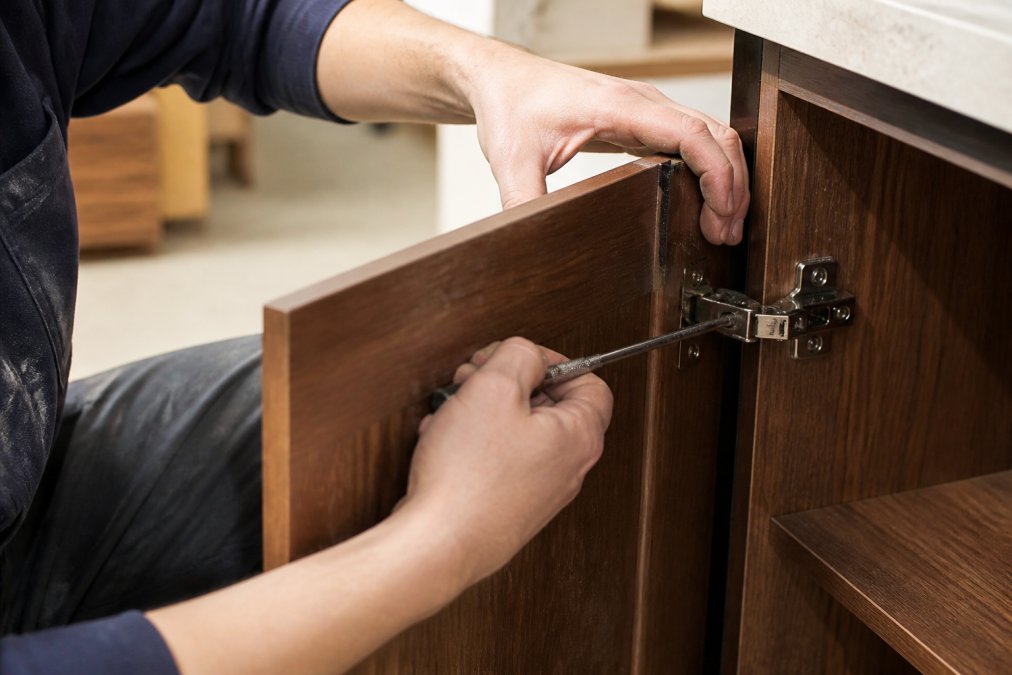
The weight of a door, the resistance of a drawer, and the sound of a cabinet closing all indicate quality. Inferior kitchens feel hollow and operate with a metallic clatter. Quality kitchens feel solid and close with a quiet thud. These details differentiate a luxury kitchen from a merely expensive one.
Sustainability and Repairability: The 2026 Quality Benchmarks
Sustainability has become a defining quality benchmark in 2026. Discerning buyers now evaluate material lifecycle environmental impact, preferring sustainably sourced timber and recycled content in engineered materials. A kitchen's footprint extends beyond manufacturing to its repairability and eventual disposal.
Repairability analysis is the new differentiator. Can a damaged door be refinished or replaced without replacing the entire unit? Solid timber excels here, offering multiple refinishing cycles. Engineered stone can often be polished to remove minor damage, while some laminates cannot be repaired at all.
Material sourcing also matters. Look for certifications that verify timber comes from responsibly managed forests. Quality manufacturers, like those ItaliaHome partners with, can trace their materials and provide transparency about sourcing.
How to Choose: Matching Materials to Your Kitchen's Climate and Use
The right material depends on your specific environment and how you use your kitchen. Material compatibility with specific climates is critical in the UK, where humidity and temperature fluctuations vary significantly between regions and home types.
Humidity and Temperature in UK Homes
UK homes often have higher indoor humidity than many other countries, especially in coastal areas like Cornwall or in flats with poor ventilation. Solid timber worktops, if not properly sealed, can absorb moisture and warp. Engineered stone and porcelain are unaffected by humidity, making them safer choices for damp kitchens. In centrally heated homes with dry air, solid timber can crack if not maintained with regular oiling.
Temperature fluctuations also matter. In a kitchen with underfloor heating, materials with low thermal conductivity, like solid timber, may expand and contract more than stone. Porcelain and quartz handle temperature changes well, but natural stone like granite can be sensitive to rapid shifts without proper expansion gaps.
A Post-Installation Maintenance Schedule
To ensure longevity, follow a care calendar tailored to your materials.
- Daily: Wipe down worktops with a soft cloth and mild detergent. Avoid abrasive cleaners on any surface.
- Weekly: For solid timber worktops, apply a small amount of food-safe mineral oil to high-use areas to maintain the finish.
- Monthly: Check and re-tighten any loose hardware, such as hinges or drawer runners, to prevent stress on joints.
- Quarterly: For natural stone worktops, apply a penetrating sealer. Test by dropping water on the surface, if it beads, the seal is intact; if it absorbs, it’s time to reseal.
- Annually: For solid timber, sand and re-oil the entire surface to remove minor scratches and restore the finish. For painted cabinets, inspect for chips and touch up with matching paint.
Matching Materials to Usage Patterns
Consider your cooking habits. Frequent high-heat cooking demands worktops with excellent heat tolerance, such as porcelain. A busy family kitchen requires stain-resistant, easy-clean surfaces like quartz. A formal entertaining space may prioritise aesthetics with acceptable maintenance trade-offs.
Repairability in Context
Repairability is a key factor in material selection. Solid timber can be sanded and refinished multiple times. Engineered stone can often be polished to remove minor damage, but deep scratches may require professional repair. Porcelain is difficult to repair; if chipped, it may need replacement. Laminates are generally not repairable. Choose materials that can be repaired rather than replaced.
Practical Steps for Your Kitchen
- Assess your environment: Measure humidity levels with a hygrometer. If above 60%, avoid solid timber worktops unless you commit to frequent oiling.
- Evaluate your cooking style: List your top five cooking activities (e.g., frying, baking, roasting) and match them to material strengths.
- Plan for maintenance: Use the care calendar above to estimate time and cost. For example, oiling a timber worktop takes 30 minutes monthly, while sealing granite takes an hour quarterly.
- Consult a specialist: For awkward layouts or specific spatial challenges, custom-built solutions from bespoke Italian kitchen specialists can adapt materials to your exact requirements. The SPAR Custom Kitchens range from ItaliaHome exemplifies how quality materials combine with flexible design to suit unique spaces.
Conclusion: Investing in Quality That Outlasts Trends
Quality materials are the difference between a kitchen that requires replacement in a decade and one that serves for generations. This bespoke kitchen material quality guide 2026 has outlined how to evaluate cabinet construction, compare worktop performance, and assess sustainability and repairability. The principles of material density, joinery quality, and surface resistance remain constant regardless of design fashions.

Kitchen longevity comes from informed choices. By applying these evaluation criteria, you ensure your investment delivers both immediate satisfaction and lasting value. The guidance from industry standards for kitchen cabinetry reinforces that structural quality underpins every successful installation.
At ItaliaHome, we specialise in handcrafted kitchens that blend traditional craftsmanship with contemporary design. Our SPAR Custom Kitchens range offers the material quality and bespoke flexibility discussed throughout this guide, sourced directly from renowned Italian brands.
Frequently Asked Questions
How can I tell if kitchen cabinets are high quality?
High-quality cabinets feature solid timber or high-grade plywood carcasses at least 18mm thick, with dovetail joints or dowelled joinery rather than staples. Doors should be 22mm thick with a consistent veneer or solid wood construction. Open a door and check the soft-close mechanism; premium brands use branded, replaceable runners. Look for a smooth, even finish without drips or rough patches, and verify the cabinet is square by measuring diagonals. Ask about the manufacturer's warranty and construction standards.
Which materials offer the best longevity for bespoke kitchens?
For cabinetry, solid oak and high-density MDF with a quality veneer or lacquer offer excellent longevity. For worktops, sintered porcelain and engineered quartz resist scratches, heat, and stains better than most alternatives. Solid timber worktops require regular oiling but can be sanded and refinished if damaged. The key to longevity is matching the material to your usage; a busy family kitchen benefits from non-porous porcelain, while a period property might suit the character of solid wood.
What is the difference between solid wood and engineered wood for kitchen cabinetry?
Solid wood, such as oak or walnut, offers unique grain patterns and can be sanded and refinished multiple times. Engineered wood, like plywood or MDF, offers superior dimensional stability, resisting warping in humid conditions. High-quality engineered boards often outperform cheaper solid wood options. The best bespoke kitchens use a combination: a stable plywood carcass with solid timber or premium veneer doors. This approach provides both structural integrity and the aesthetic of natural wood grain.
What should I look for in high-end kitchen worktop materials?
Focus on material density and non-porous surfaces. Dense materials like sintered porcelain and engineered stone resist staining and bacterial growth without sealing. Check the material's heat tolerance; porcelain can withstand direct heat from pans, while quartz can be damaged by extreme temperature changes. Evaluate edge profiles and the quality of the joinery. A seamless joint on a quartz worktop indicates a skilled fabricator. Finally, confirms the material's repairability; some surfaces can be polished, while others may need replacement.
How do sustainable material choices impact kitchen quality in 2026?
Sustainable sourcing is now a quality marker. Responsibly sourced solid timber from FSC-certified forests ensures the wood is dense and mature, offering better performance than fast-grown alternatives. Low-VOC finishes and adhesives improve indoor air quality. High-quality materials that last longer reduce the environmental impact of replacement. When evaluating bespoke kitchens, ask about the origin of the timber and the durability of the finish, as these factors directly affect both the planet and the kitchen's lifespan.
Choosing the right materials requires expertise and honest guidance. ItaliaHome provides exactly that, with direct import, custom project capability, and a portfolio of established brands. ENQUIRE about our bespoke kitchen projects and discover how quality materials transform your home.